Land Conservation
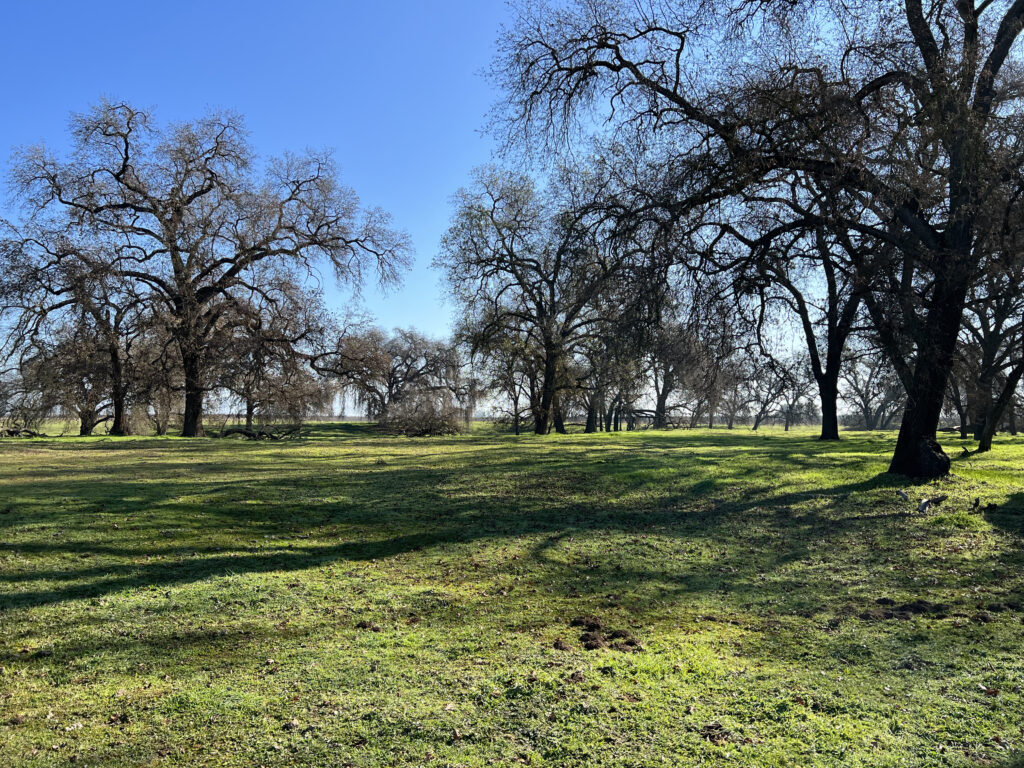
The Kings River Land Trust works to conserve our region’s most treasured agricultural land and natural resources in California’s Central Valley. This is accomplished by using legal tools, guiding real estate principles and partnerships with funding agencies. The primary tool we use to keep land in private ownership while protecting it forever is a conservation easement.

What are Conservation Easements?
The most traditional tool for conserving private land, a “conservation easement”, is a legal agreement between a landowner and a land trust or government agency that permanently limits uses of the land in order to protect its conservation values. It allows landowners to continue to own and use their land, and they can also sell it or pass it on to heirs.
When you donate or sell a conservation easement to a land trust, you give up some of the rights associated with the land. For example, you might give up the right to build additional structures, while retaining the right to grow crops. Future owners also will be bound by the easement’s terms. The land trust is responsible for making sure the easement’s terms are followed. This is managed through “stewardship” by the land trust.
Conservation easements offer great flexibility. An easement on property containing rare wildlife habitat might prohibit any development, for example, while an easement on a farm might allow continued farming and the addition of agricultural structures. An easement may apply to all or a portion of the property, and does not require public access. See our factsheet for some further details.
Qualifying For A Tax Deduction
A landowner often sells a conservation easement, but easements are also donated to a land trust. If the donation benefits the public by permanently protecting important conservation resources, and meets other federal tax code requirements, it may qualify as a tax-deductible charitable donation. Easement values vary greatly; in general, the highest easement values result from very restrictive conservation easements on tracts of developable open space under intense development pressure. In some jurisdictions, placing an easement on your property may also result in property tax savings. KRLT is prohibited by law to provide any tax advice, but we strongly encourage landowners to consult with their tax advisor or attorney about possible tax savings implications.


Reducing Estate Taxes
Perhaps the most important benefit, a conservation easement can be essential for passing undeveloped land on to the next generation. By removing the land’s development potential, the easement typically lowers the property’s market value, which in turn lowers potential estate tax. Whether the easement is donated during life or by will, it can make a critical difference in one’s heirs’ ability to keep the land intact.
How much is an easement worth?
Hypothetical example of 100 acres of prime irrigated land:
- Fair market value of bare land (before the conservation easement): $25K/ac
- Fair market value after conservation easement is placed: 20K/ac
Indicated conservation easement value: $5K/ac
The $5,000 is what would be paid the landowner per acre of land. It is Kings River’s policy to request a donation by the landowner of 5% of the conservation easement value to help monitor, steward and protect the conservation easement into perpetuity. This may be considered a tax-deductible donation. The landowner pays for the appraisal but this and some transaction costs may be paid/reimbursed by a third party (funder) at the closing. Landowners cover their own legal or accounting costs.
What are our easement priorities?
Kings River Land Trust’s priority is to conserve the prime and statewide conservation easements to accomplish the goal of conserving agricultural land and natural resources for future generations. One is an agricultural conservation easement (ACE), intended to sustain viable farms and ranches without loss due to development into non-agricultural uses. The second type of conservation easement is a natural habitat conservation easement (NHCE) intended to sustain native habitat for its ecological and social value.
Kings River Land’s priority is to conserve the prime and statewide important farmland throughout our service area as a resource. This priority is equal to the goal of conserving important habitat resources. Either resource will not impede the other, however they can be equal.
Please access these factsheets for our easement selection criteria, ACE or NHCE.


How To Conserve Your Land
Step 1- Read and research more about our conservation easements by reading this blog post.
Step 2 - Follow this link to review our easement criteria, Project Selection Criteria Guidelines and our easement factsheet.
Step 3 - Chat the concept over with your family members and/or heirs. This is a major decision and should consider all parties involved.
Step 4 - Review our application and Project acceptance process.
Step 5 - Reach out to us and we can discuss your questions, interest and project (please contact us for more information or questions).
At any time, reach out to us and we would be happy to discuss your project with you (please contact us for more information or questions).
Our Service Area
Kings River Land Trust’s service area is the Kings River watershed: roughly bounded by on the east by the Sierra foothills, on the north by Dog Creek and Highway 180, on the west by the Fresno Slough and the north fork of the Kings River, and on the south, east from Stratford to Yettem.