
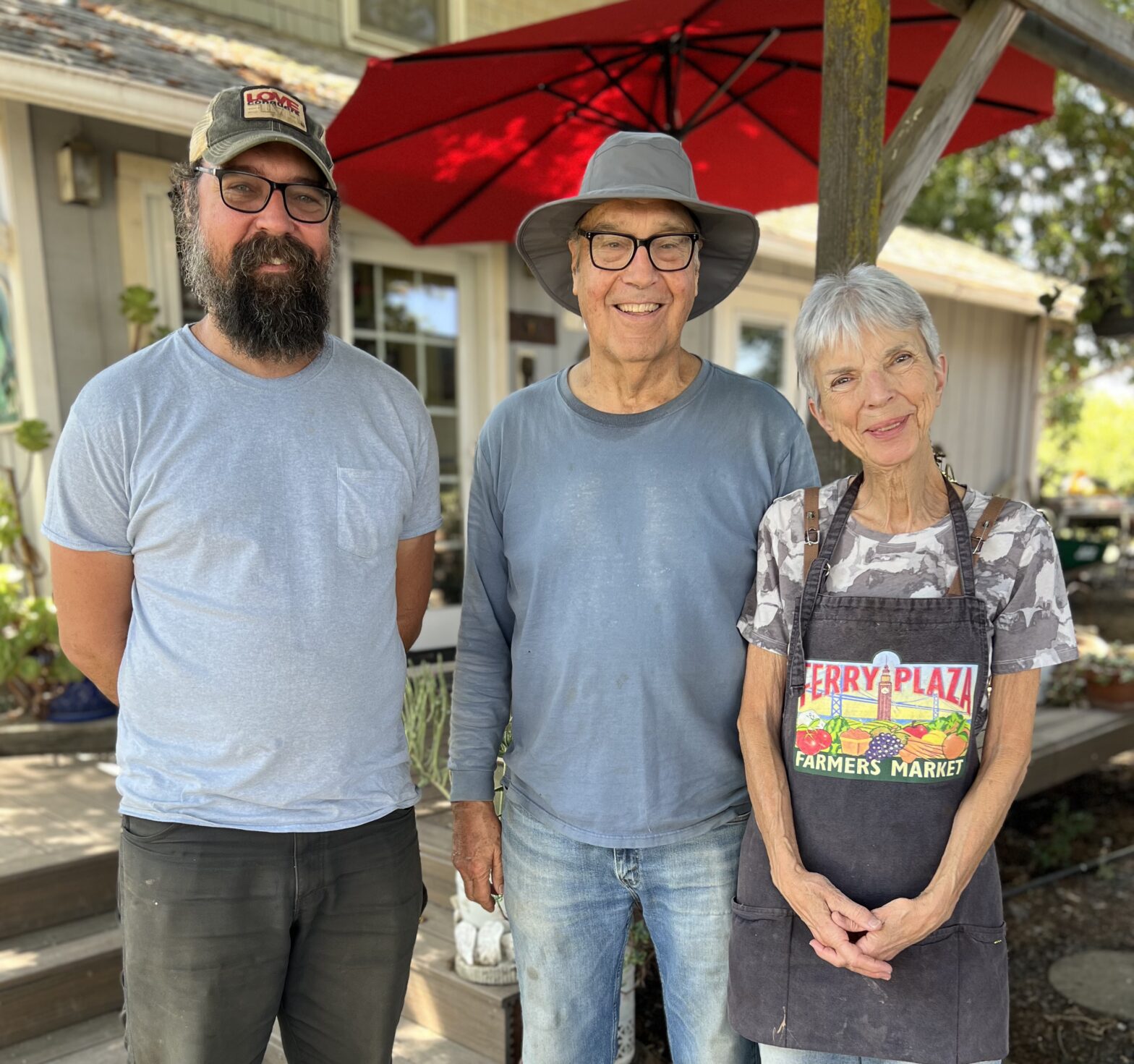
Blossom Bluff Orchards is owned and operated by the Loewen family: Ted, center, and Fran, right, and their son, Bryce, left, and daughter Renata (not pictured).
There’s a quiet stretch of road in Parlier that is home to an organic farming operation owned by a family with generational ties as strong as the Kings River that flows along the eastern stretch of farm’s property line.
Blossom Bluff Orchards’ story began at the turn of the 20th century.
Daniel and Babbette Lichti were German immigrants and farmworkers tied to the Mennonite community that called eastern Fresno County home.
“The church helped by giving them the money they used to buy the farm,” says their granddaughter Fran Loewen.
The Lichtis planted their family’s tree on this particular Fresno County land in 1931. The purchase included 30 acres of farmland and a two-story Victorian farmhouse, where Fran was raised by her mom and dad. And then Fran and her husband, Ted Loewen, raised Bryce and his sister, Renata.
Today, all of the Loewens, including Bryce’s sons, Archer and Jackson, call Blossom Bluff Orchards home.
“My sons will be the fifth generation raised on the property,” Bryce says. “We are a proper family farm.”
Over the years, the Lichtis and Loewens bought neighboring properties when those families either had kids who weren’t interested in farming, or the families themselves were done farming.
“The farm is a funny shape,” Bryce says. “It’s contiguous, but it’s a ‘C’ shape.”
At one point, Blossom Bluff grew about 20 varieties of fruit in large blocks. Today, it grows nearly 100 varieties, including plums, peaches, pluots, persimmons, oranges and pomegranates, across roughly 80 acres.
They’re even growing kiwi fruit along the river bottom on a couple of acres.
Blossom Bluff’s focus is flavor, not shelf life. Many of its varieties are recognized by the Slow Food Movement’s Ark of Taste for their cultural and culinary importance.
“That’s our niche,” Bryce says. “We sell direct to customers and chefs who are looking for specific flavor and quality.”
Once conventional, Blossom Bluff pivoted to organic
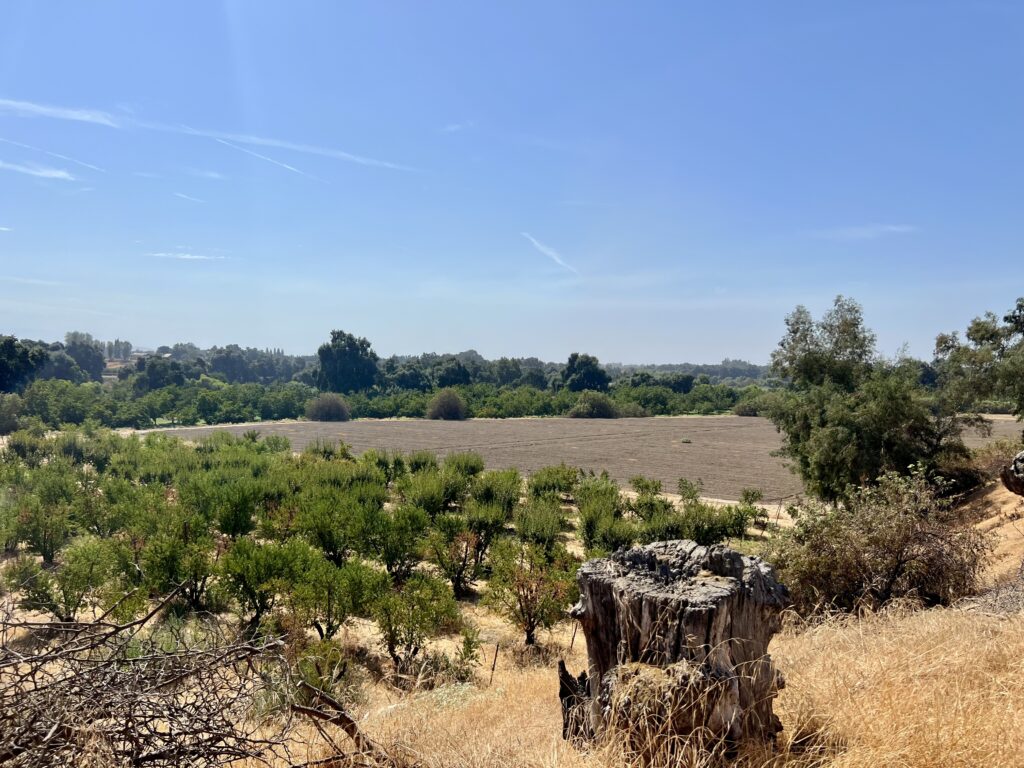
Blossom Bluff grows nearly 100 varieties of fruit, including a couple of acres of kiwi along the river bottom.
The choice to go sustainable was in response to smaller growers like them selling out.
“We believed there was another way,” says Ted.
That “other way” meant learning from organic and sustainable farmers, attending agricultural classes, and experimenting.
While farming organic can create challenges in the form of stubborn plants like Johnson grass and pests like ground squirrels and gophers, the farm is a natural hub of activity and sustainability.
“In terms of larger mammal life, the biggest you’ll see out here are coyotes, but you’ll see bobcats, rodents, rabbits, skunks, gophers, ground squirrels, meadow mice – all kinds of activity,” Bryce says. “It’s a challenge, especially in organic and trying to control. We don’t utilize any kind of poison and even if we could, we wouldn’t want to because of the predator population – we have an amazing hawk population and owls, even egrets I’ve seen eat gophers.
“I’m hoping soon … to incorporate some grazing into our operation here,” Bryce adds. “I’d like to start small-scale with poultry, and then upgrade to sheep.”
Blossom Bluff also understands the importance of keeping bees.
“We have about 14 hives scattered around the farm,” Bryce says. “They are stationary and manageable but not heavily messed with. I occasionally harvest some honey and it’s really good. They’re mostly here for pollination purposes. And it’s kind of a fun hobby.”
Product quality important from beginning to end
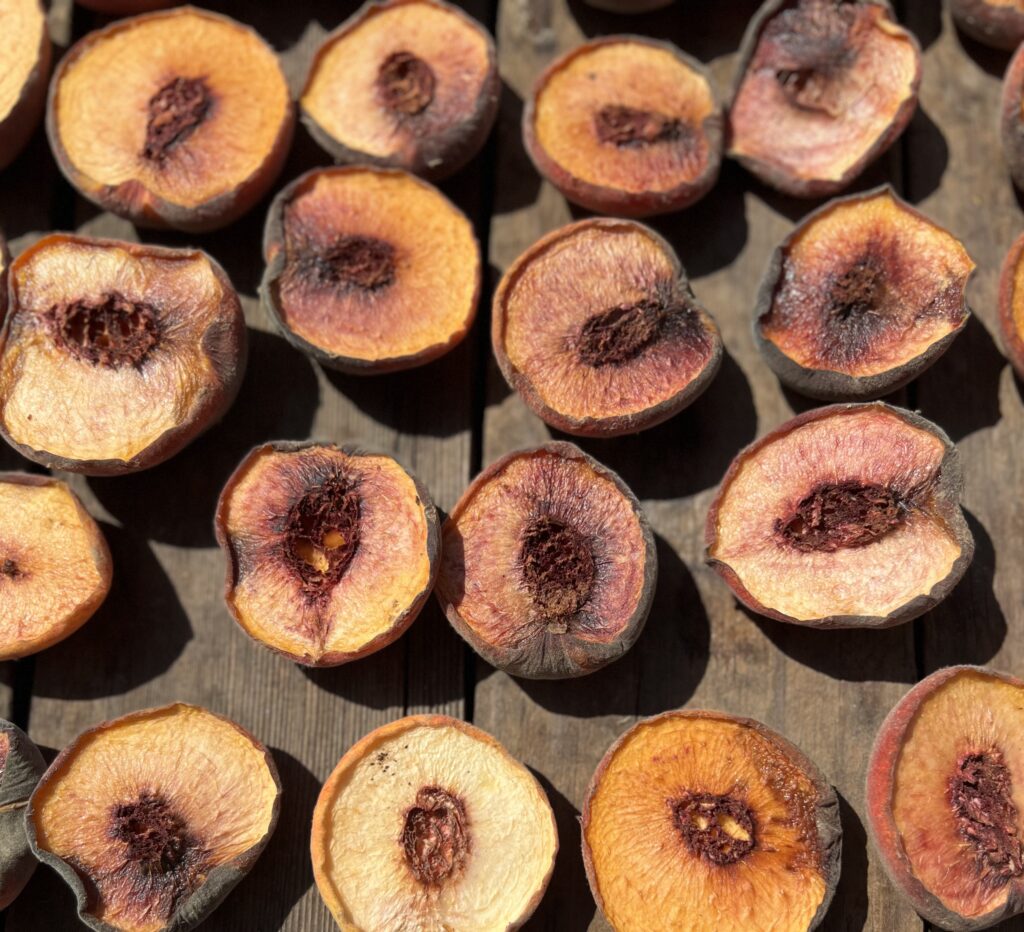
Delicious Blossom Bluff fruit dries in the sun.
Blossom Bluff is home to a packing house that operates with sustainability in mind. Bryce reports they get a lot of the packing boxes back from the businesses and buyers they supply
fruits to.
“They get 5 to 10 times use before we have to discard them,” Bryce says.
And any produce that wouldn’t “make the cut” because it’s overripe or scarred goes through a labor-intensive process of hand cutting and drying in the sun.
“We don’t like to waste anything,” Bryce explains. “We sell a fair amount of ‘seconds’ to jam makers and breweries. What we can’t sell we try to reclaim on the drying yard. And then we wash them and redry before we actually sell them.”
Bryce says the dried fruit goes through at least three rinses before it’s dried again and sold to the public.
Maintaining water sustainability and soil health is key
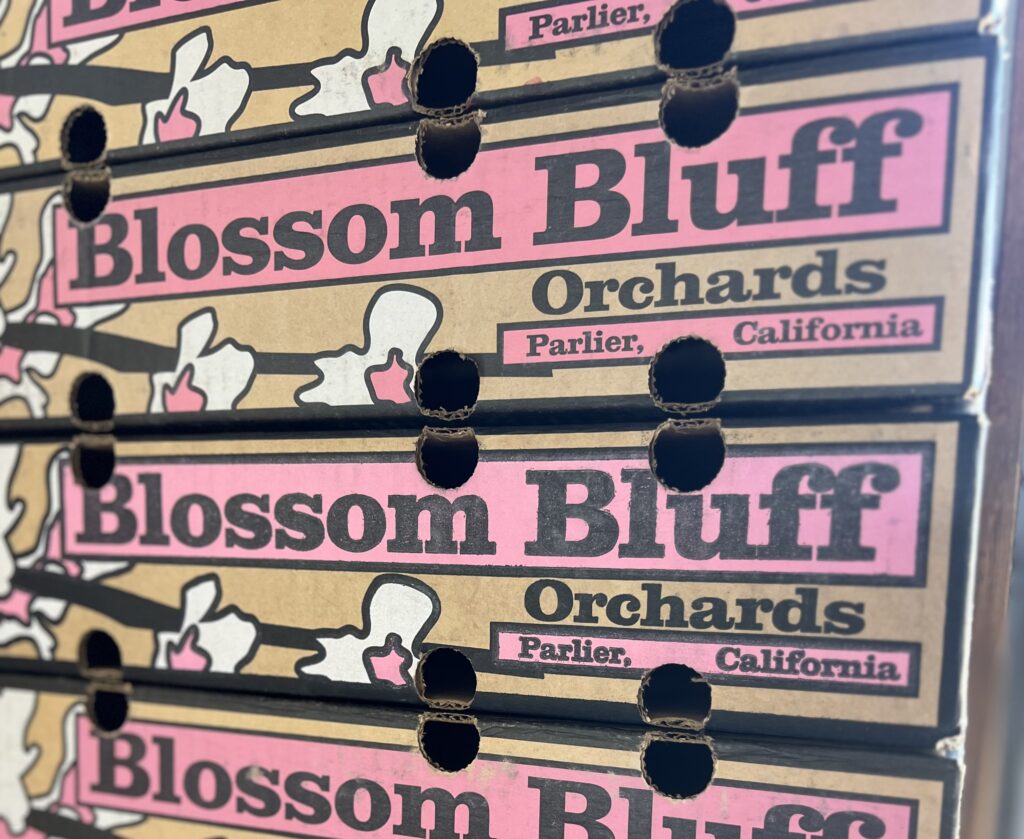
Blossom Bluff recycles and returns the boxes used to pack their fruit and ship to customers back to the packing shed.
What does the future hold for Blossom Bluff Orchards? Water will always be a concern, especially in regards to the Sustainable Groundwater Management Act, a 2014 law that created plans to balance groundwater pumping and recharge, aiming for sustainable basins by 2040.
“The river is right down there, so our ground level water stays pretty consistent,” Ted says. “I don’t have an answer for what the plan is yet when 2040 rolls around and we’re at ‘zero’ and what they’re gonna do with people like us that only have one source.”
Keeping the soil healthy is on top of the list of challenges, as well.
“We’re always working on getting the ‘easy’ nitrogen in instead of the “synthetic” nitrogen since we went ‘California clean,’” Ted says. “When we first got away from conventional agriculture, we planted more cover crop to help soil. Even natural cover – weeds – do something good for the soil.
“And we’ve been able to have a more diverse environment out there to keep the “good bugs” out there,” Ted adds. “That’s helped the soil.”
Bryce says the farm went from low till to no till with the help of a change in their irrigation system that was funded through a grant award.
“Before, I was trying to avoid doing a lot of discing in general but we always had to cut the furrows for the water,” Bryce says. “Now we don’t have to do even that. For the most part, unless we’re going to be planting or something, I try to leave the soil as undisturbed as possible because that’s supposed to dramatically improve biodiversity in the soil.”
“Currently we spread about four tons of compost per acre per year,” Bryce adds. “And we do some foliar feeds on the trees in the spring that I am sure incorporates into the soil as well.”
What’s next for Blossom Bluff Orchards
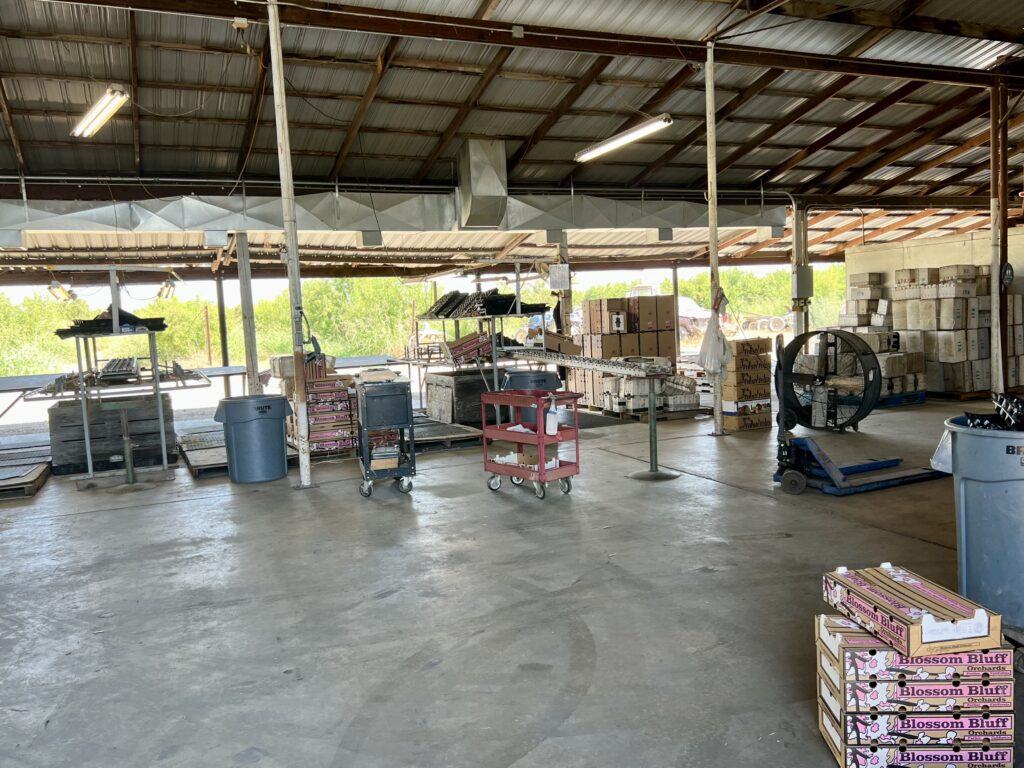
Blossom Bluff’s packing house operates with sustainability in mind.
Bluff produce is sold regularly at the Vineyard Farmers Market in Fresno on Wednesdays and Saturdays, as well as at farmers markets in the Bay Area and Southern California
You can also find their fruit in local restaurants. For example, if you are a fan of Ampersand Ice Cream, you may have gotten to try ice cream flavors featuring Blossom Bluff-grown fruits like apricots.
“My kids are growing up in this,” Bryce says. “It feels like we’re right on the edge of how big a small family farm can be — but we’re still here, and we’re still making it work.”